
The wise one established in virtue,
Developing composure, and wisdom,
That ardent, and prudent monk,
It is he who disentangles this tangle. (SN 7.6)
Books
home > resources > books
BC’s books

find all of BC’s publications as pdfs
find all of BC’s books at Lulu.com
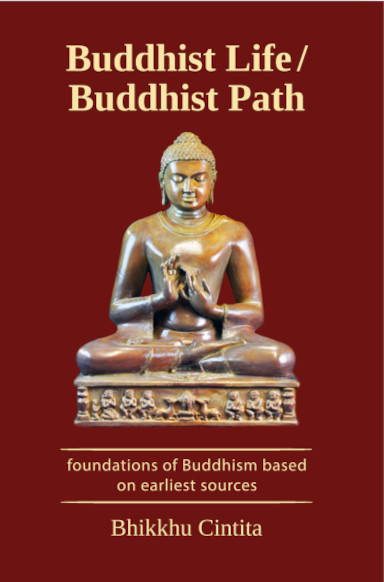
Bhikkhu Cintita, 2019, Buddhist Life/Buddhist Path: foundations of Buddhism based on earliest sources.
This textbook, based on the earliest stratum of Buddhist texts, provides a holistic and proportionate account of the range of the Buddha’s Dhamma, interpreted for the modern student.

| 
| Soon available from your favorite bookseller. |
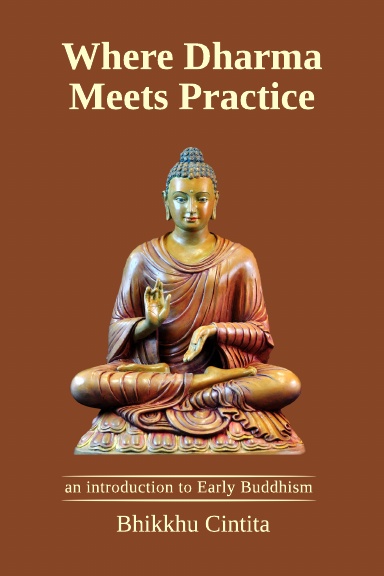
Bhikkhu Cintita, 2025, Where Dharma Meets Practice: an introduction to early Buddhism
This book serves as a concise, easy introduction to the Buddha’s early teachings for the modern reader, and how to put them into practice.
|
|
| Now available from your favorite bookseller. |
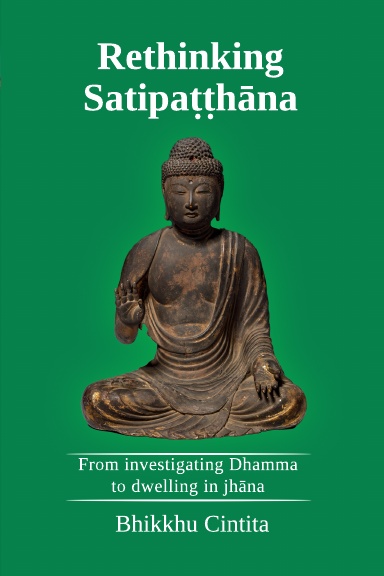
Bhikkhu Cintita, 2025, Rethinking Satipaṭṭāna: from investigating Dhamma to dwelling in Jhāna.
This is a thoroughgoing reevaluation of the “mindfulness” teachings behind vipassanā meditation, based on the earliest Buddhist texts and brought into accord with modern cognitive research.
|
|
|
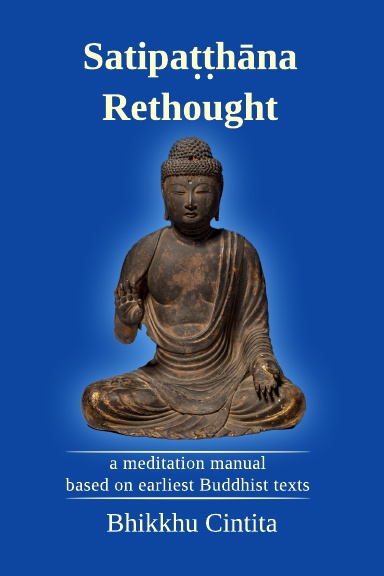
Bhikkhu Cintita, 2024, Satipṭṭhāna Rethought: a meditation manual based on earliest Buddhist texts.
This is a meditation manual based on a close reading of the Satipaṭṭhāna Sutta, an ancient turtorial, and on the exercises found therein.
|
|
|

Bhikkhu Cintita, 2021, Dependent Coarising: meaning construction in the twelve links.
This is a thoroughgoing reevaluation of one of the most profound and far-reaching Buddhist teachings, based on a close reading of the early texts.
|
|
|

Bhikkhu Cintita, 2014, A Culture of Awakening: the life and times of the Buddha-sasana.
This book examines the living Dhamma in its cultural, social, and historic dimensions set in motion with the Buddha’s establishment of the monastic Sangha. It looks at its relatively tolerance of an inauthentic “folk Buddhism,” and suggests that this enabled the emergence of Buddhism as the first world religion.
|
|
|
Early Buddhist texts
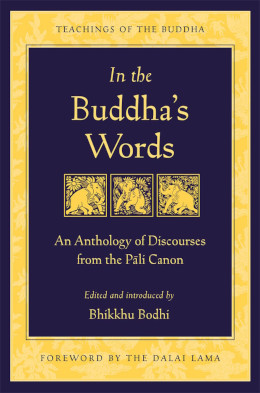
Bhikkhu Bodhi, 2005, In the Buddha’s Words: an anthology of discourses from the Pali Canon.
I recommend this large anthology of suttas and passages from suttas as an entry point for the student’s encounter with the early Budhist texts themselves. Bhikkhu Bodhi is the foremost living translator from Pali into English, and has organized these texts by subject matter with extensive explanation.
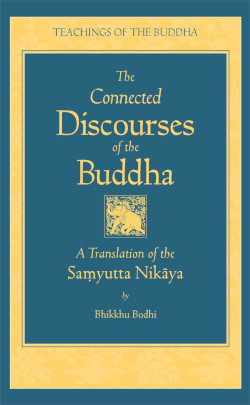
Various translators, various years, The [Long/Middle-length/Connected /Numbered] Discourses of the Buddha, Wisdom Publications.
These four volumes are recommended translations of the first three of the four sutta compilations (nikāyas) of the Pali canon, referred to throughout this site as DN, MN, SN, and AN. The translators are Maurice Walsh (DN), Bhikkhu Ñaṇamoli & Bhikkhu Bodhi (MN), and Bhikkhu Bodhi (SN, AN). I always keep these close at hand.
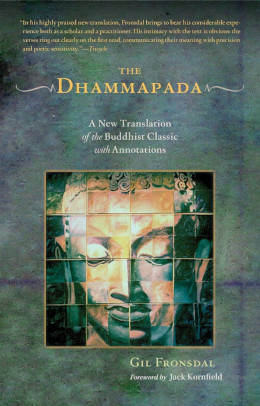
Gil Fransdal (trans.), 2005, The Dhammapada, Shambhala Publications.
This is my favorite translation of perhaps the most popular text in all of Buddhism.
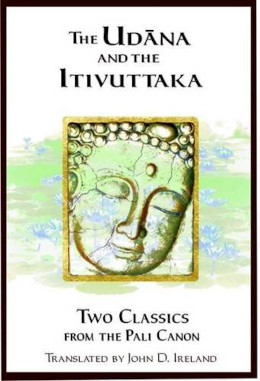
John D. Ireland (trans), 1998, The Udāna and the Itivuttaka: two classics from the Pali Canon, Buddhist Publication Society.
This is an excellent translation of two of the most inspiring early Buddhist texts.

Bhikkhu Bodhi, (translator), 2016, The Buddha’s Teachings on Social and Communal Harmony: An Anthology of Discourses from the Pali Canon, Wisdom Publications.
This book provided early Buddhist advice about how to live communally, how to live harmoniously, mixing like milk and water, and how to settle disputes, viewing each other with kind eyes. This book is relevant even in non-Buddhist communities.
Sarah Shaw, 2008, Buddhist Meditation: An anthology of texts from the Pali Canon, Routledge.
This is a wonderful resource for students of early Buddhist meditation that brings the relevant texts together in one place.
Ajahn Sujāto & Ajahn Brahmali, 2016, Authenticity of the Early Buddhist Texts, Buddhist Publication Society.
This argues for the viability of a well-definable corpus that closely reflects what the Buddha actually taught.
Dhamma scholarship
Kaṭukurunde Ñāṇananda, 1974, The Magic of the Mind: an exposition of the Kālakārāma Sutta, seeingthroughthenet.net.
This discusses the Buddha’s simile that consciousness is like a magic show, illusory
Kaṭukurunde Ñāṇananda, 1971, Concept and Reality, seeingthroughthenet.net.
This discusses the insubstantiality and unreliability of concepts and the mechanisms by which they arise or cease to arise.
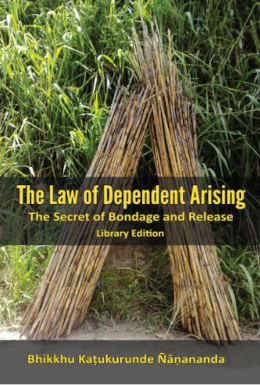
Kaṭukurunde Ñāṇananda, 2016, The Law of Dependent Arising: the secret of bondage and release, seeingthroughthenet.net.
A serious and insightful interpretation of a generally poorly understood teaching, whose foundational importance the Buddha declared.
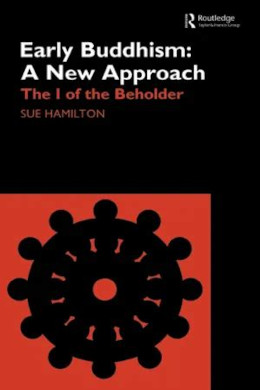
Sue Hamilton, 2000, Early Buddhism: a new approach, Routledge.
A persuasive exposition of the critical and pervasive subjective or epistemic perspective of the Buddha’s teaching.

Eviatar Shulman, 2014, Rethinking the Buddha: early Buddhist philosophy as meditative perception, Cambridge University Press.
An exposition of the nuts-and-bolts nature of Dhamma, subject to experiential and even meditative verification.
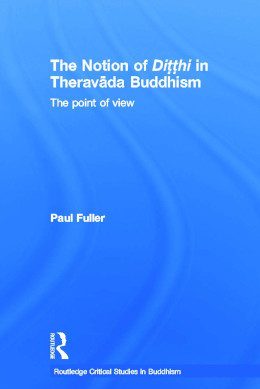
Paul Fuller, 205, The Notion of Diṭṭhi in Theravada Buddhism: the point of view, Routledge Curzon.
Right view as a detached way of seeing things, rather than something that is objectively “true.”
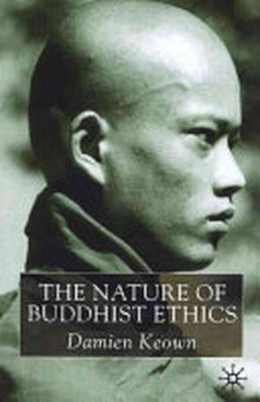
Demien Keown, 1992, The Nature of Buddhist Ethics, Palgrave.
This is an insightful study that argues that Buddhism is a form of virtue ethics, similar to that developed by Aristotle and Thomas Aquinas in western thought.
Other topics
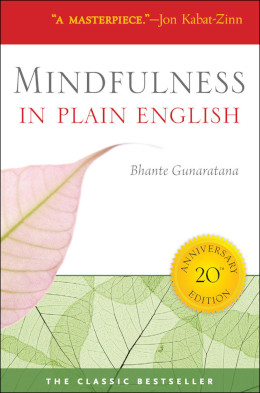
Bhante Gunaratana, 2002, Mindfulness in Plain English, Buddhist Publication Society.
This is perhaps the most popular introduction to Buddhist meditation in the English language. It provides many practical tips at a nuts-and-bolts level.
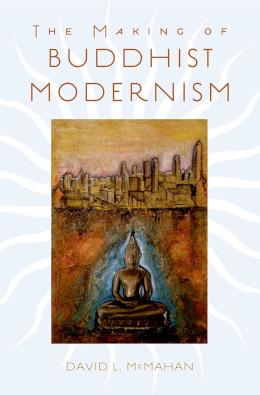
David McMahan, 2008, The Making of Buddhist Modernism, Oxford.
This is a thorough study of the absorption of modern preconceptions into the content of what is taught as Buddhism in modern Buddhism. It method is to trace the sources of individual modern Dhamma teachings, either in some Asian Buddhist tradition, or in some western cultural/religious/intellectual tradition. The results are surprising.

Trevor Ling, 2013 [1973], The Buddha: social-revolutionary potential of Buddhism, Pariyatti.
Trevor Ling shows the ways the Buddhism does not make sense without understanding its profound social dimension. He examines the early history of Buddhist communities, the role of the Sangha as the center from which pro-social values spread, and Buddhist practice as a means of breaking down the autonomous individual.

Bhikkhu Ariyesako, 1999, The Bhikkhus’ Rules: a Guide for Householders, pdf at AccesstoInsight.org.
This short book gives an overview of the precepts found in theVinaya, the monastic code. These precepts have been followed by the Sangha continuously since the time of the Buddha until today throughout most of the Buddhist world. This book is a clear introduction intended for lay readers.