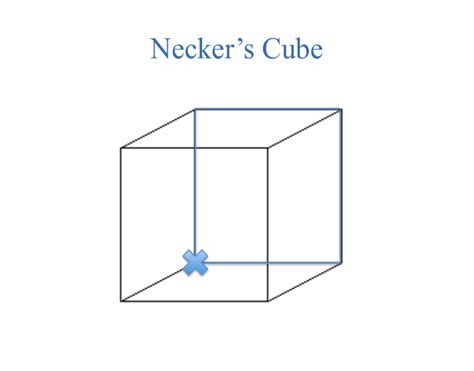
What do we mean by “knowledge and vision of things as they are”? This question is asked less frequently than it deserves. Many may assume that it is ineffable, and that we’ll know it when we finally see it. Nonetheless, the early texts do provide some substantial clarity about what to expect. Consider the following exchange between the wanderer Kokanada of a non-Buddhist sect and the Buddha’s right-hand monk Ānanada,
K: “How is it, sir? Do you hold the view ‘The world is eternal; this alone is true, anything else is wrong’?”
Ā: “I don’t hold such a view, friend.”
K: “Then do you hold the view ‘The world is not eternal; this alone is true, anything else is wrong’?”
Ā: “I don’t hold such a view, friend.”
Kokanada then asks further questions in this vein, such as whether the world is finite or infinite, whether the soul and the body are the same or different, and whether or not the Tathāgata exists after death. Each of Kokanada’s questions evokes in the same reply,
Ā: “I don’t hold such a view, friend.”
Kokanada seems taken aback at Ānanda’s apparent obliviousness,
K: “Could it then be that you do not know and see?”
Ā: “It isn’t the case, friend, that I do not know and see. I know and see.”
K: “How, friend, should the meaning of this statement be understood?”
Ā: “‘The world is eternal; this alone is true, anything else is wrong,’ friend, this is a speculative view.”
… and so on for each of Kokanada’s questions.
Ā: “To the extent, friend, that there is a speculative view, a basis for views, a foundation for views, obsession with views, the origination of views, and the uprooting of views, I know and see this. When I know and see this, why should I say: ‘I do not know and see.’ I know, friend, I see.” (AN 10.96)
If there have ever been instances of two people talking right past one another, this is certainly one of them. Notice that Kokanada’s questions were all existential. He was probing for clarity about the Buddhist ontological stance on what was really true of the world “out there.” But we know that the Buddha famously left such questions unanswered (MN 63, MN 72). Ānanda’s responses to these questions, on the other hand, were explained epistemically. He was concerned with how the heck such existential views might get into one’s head, into the world “in here,” in the first place, as speculation, then as obsession, and with how we might rid ourselves of such vexing notions.
The difference between these two perspectives was quite radical for the time. Traditionally the resolution of the human condition had been sought “out there,” through understanding to cosmological forces speculated to be at work “out there,” so that we might control or adapt to them. (We can think of our modern pursuit of happiness in much the same way, but through understanding economic and social forces at work “out there,” so that we might use them for personal success.) For this reason, the answers to existential questions were crucial. For the Buddha, the resolution of the question was to be sought “in here,” in the human capacity or incapacity to apprehend the world properly. The human mind is the origin of our experience, even of our experience of what we think is the world “out there.” Therefore, experience and the cognitive architecture that produces experience are the primary themes that run throughout the early wisdom teachings.
The experience produced by our cognitive architecture is primarily of a world “out there,” an “objective reality” that appears to us to transcend experience, in the sense that it would be there even if we were not here to experience it. In this “objective reality” all the objects exist that we desire, fear, own or obsess over. In this “objective reality” existential, ontological and metaphysical views seem reasonable. As part of our experience we almost always take at face value that most of what we experience simply reflects this “objective reality” directly. Not only that, but immediate access to this outer world is simply there, effortlessly; all we have to do is show up,
There it is: your plush arm chair, the cat on your lap, the pipe in your mouth, a cup of tea, a snifter of cognac and a dog-eared copy of Buddhist Life/Buddhist Path on your side table.
Simple reflection on the science of this scenario shows that it cannot be so simple. As you sit in your arm chair, your brain sits in your skull in total darkness and total silence, communicating with whatever is “out there” through raw neural impulses originating in your retina, your eardrum, etc. If the brain in your fathom-long body is the source of your experience, then anything beyond neural sense impulses must be fabricated in the brain (or through the emergent mental processes running on your brain architecture). A lot of mental activity goes on from the impingement of neural impulses to the production of your cozy experience, no matter how vivid and immediate your experience seems.
In fact, we have no direct access to such a reality independent of the filter of human cognition which produces our experience. A fundamental principle to keep in mind is,
Experiencing things as real is not the same as experiencing real things.
For all we know, we live in a the computer-generated Matrix®, or in a dream. Maybe what is really right side up is systematically converted to up side down before we experience it.
The Buddha was perhaps the ultimate skeptic about our ability to know what is really going on “out there.” This would explain the Buddha’s reluctance to answer questions of existence. The Buddha also persistently reminds us of the unreliability of what we experience as reality “out there” when he points out the worldling’s vexing habit of seeing permanence in the impermanent, pleasure in suffering, beauty in the ugly, and self where there is none, habits that lead to a life of broken promises and pain when things turn out otherwise. It also explains the Buddha’s routine refusal to endorse views. For the Buddha, we have no basis for ever knowing if any view is really true or false objectively “out there”:
There are five things, Bhāradvāja, that may turn out in two different ways here and now. What five? Faith, approval, oral tradition, reasoned cogitation, and reflective acceptance of a view. These five things may turn out in two different ways here and now.
Now something may be fully accepted out of faith, yet it may be empty, hollow, and false; but something else may not be fully accepted out of faith, yet it may be factual, true, and unmistaken. [as for faith, so for approval, oral tradition, reasoned cogitation, and reflective acceptance of a view] (MN 95 ii170)
Views, by their very nature are presumptive (maññita), and for the Buddha,
Presumption is a disease, presumption is a tumor, presumption is a dart. By overcoming all presumptions, bhikkhu, one is called a sage at peace. And the sage at peace is not born, does not age, does not die; he is not shaken and does not yearn. For there is nothing present in him by which he might be born. (MN 140 iii246)
Nonetheless, what we presume are parts our experiential world, and they are eliminated only by the sage at peace, who has learned to experience the world otherwise.
In his wisdom teachings, the Buddha explicitly limits the word ‘world’ (loka) to refer to this world as we experience it, without attributing to it any special status as “real,”
In this fathom-long living body, along with its perceptions and thoughts, lies the world, the arising of the world, and the cessation of the world. (AN 4.45)
Right at the beginning of the Dhammapada we find,
Mind precedes all phenomena. Mind is their chief; they are all mind-made. (Dhp 1)
Phenomenology is a field in modern philosophy that began similarly with the primacy of experience, as a challenge to the metaphysical premise of science that there is a real, objective world that transcends human experience, but that humans have special access to by other means. Accordingly, the Buddha has been described as a phenomenologist by some modern Buddhist thinkers. Loka seems to refer precisely to the phenomenal world, what the early modern phenomenologists call the life world (Lebenswelt). It is our world of experience.
In any case, what goes on in some reality that transcends experience is not critical to practice. Practice occurs squarely in the world as we experience it, or as it appears to us. It is in this world that suffering arises, that our incentive for practice arises, that the factors arise that inform our kammic decisions (which constitute our practice), that we experience the fruits of practice, that we are able to track our progress, that we gain confidence in the Dhamma, and it is in this world that we awaken.
Unfortunately, Dhamma is rarely taught or understood from this phenomenological perspective. I would caution that without this perspective the Dhamma is commonly misinterpreted, often trivialized, and often left obscure. To unlock Dhamma’s secrets start with practice experience, not theory.
Excerpt from my forthcoming revision of
Dependent Coarising, “1. The mechanics of experience.”