On Buddhist ethics. The primary principle of Buddhist ethics is the development and cultivation of virtue as a quality of character. Virtuosity in virtue is a quality of the awakened ones. This is contrasted with modern understandings of ethics, but is arguably a basic human drive and definitive of a meaningful or well-lived life. (February 9, 2024)
Author: bhikkhu cintita
3. Living in devotion

Japan edit.2 This is the third of five videos in the online course “Mindfulness: where Dharma meets practice.” “Living in devotion” discusses the wider motivational context of Buddhist practice, how we develop it and how we remain mindful of it, in order to uplift and incentivize our practice.
4. Living in wisdom
This is the fourth of five videos in the online course “Mindfulness: where Dharma meets practice.” “Living in wisdom” takes us from right understanding of Dharma to the intense examination and internalization facilitated through mindful observation of cognition.
5. Living in the midst
This is the fifth of five videos in the online course “Mindfulness: where Dharma meets practice.” “Living in the midst” offers practical advice on integrating Buddhist practice into a modern life already busy with responsibilities and pursuits, and to nonetheless make it foundational in a meaningful and satisfying way.
Contemplations of non-self
Non-self is a practice more than it is a philosophical viewpoint. However, this practice begins with a conceptual investigation of the presumed experiential manifestations of the constructed self. (February 16, 2024)

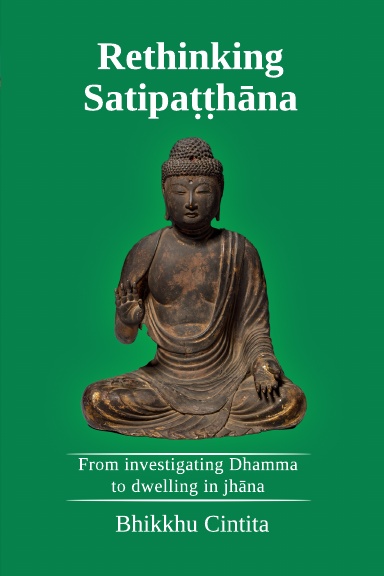
Rethinking Satipaṭṭhāna: from investigating Dhamma to dwelling in jhāna
Satipaṭṭhāna (often translated as “Foundations of mindfulness”) is the Buddha’s method of wisdom contemplation, best known through the ancient practice tutorial The Satipaṭṭhāna Sutta. It is recognized as the basis of modern vipassanā or insight meditation and of many other modern and historical practices. Unfortunately, the currents of Buddhist intellectual history have not been kind to this early teaching.

“The wonder of intrinsic motivation” (2020)
In extrinsic motivation a task is performed in order to achieve some goal outside of the task itself. In intrinsic motivation a task is satisfying and worth pursuing in itself. Psychological research demonstrates a greater degree of satisfaction, meaning, well-being, proficiency and creativity associated with intrinsic motivation. It is striking how closely this is to a Buddhist understanding of such matters.

Introduction to early Buddhism, book and class
Book
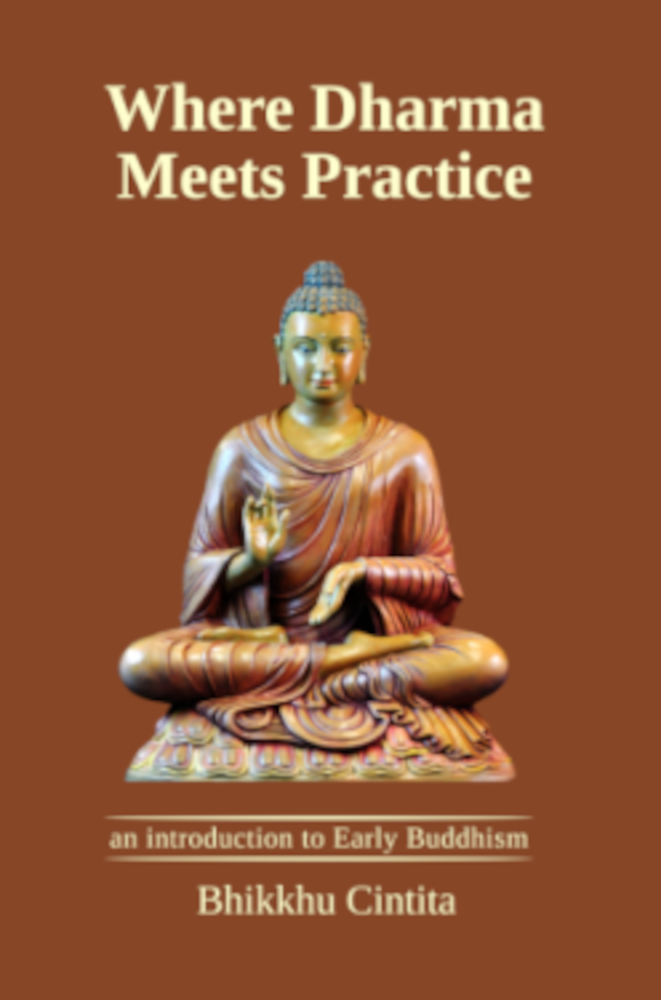
I’ve just published a new addition of my 2020 book, Mindfulness, where Dharma meets practice. The title is now simply Where Dharma Meets Practice. (If you follow my writings, you might know that I maintain that the word ‘mindfulness’ (the word, not the concept) has not served our understanding of the early texts well. It is no longer a faithful translation of Pali sati) I’m doing something new with this book: publishing it for global distribution; it a few weeks you should be able to buy it from you local book seller, at a nominal price. It can be found as PDF or as PAPERBACK.
Buddhism is a practice tradition. It aims at achieving the cardinal skills of virtue, wisdom, and maturity. The awakened person has perfected these skills, much as the master chef and the virtuoso pianist have perfected theirs. The Dharma is a guide for Buddhist practice, much as a cookbook is a guide for haute cuisine.
We discover that the Buddha’s Dharma is radical in any culture. This book gives particular attention to bringing these ancient teachings to life for those trying to navigate our troubled modern times.
Book
I’ve just published a new addition of my 2020 book, Mindfulness, where Dharma meets practice. The title is now simply Where Dharma Meets Practice. (If you follow my writings, you might know that I maintain that the word ‘mindfulness’ (the word, not the concept) has not served our understanding of the early texts well. It is no longer a faithful translation of Pali sati) I’m doing something new with this book: publishing it for global distribution; it a few weeks you should be able to buy it from you local book seller, at a nominal price. It can be found as PDF or as PAPERBACK.
Buddhism is a practice tradition. It aims at achieving the cardinal skills of virtue, wisdom, and maturity. The awakened person has perfected these skills, much as the master chef and the virtuoso pianist have perfected theirs. The Dharma is a guide for Buddhist practice, much as a cookbook is a guide for haute cuisine.
We discover that the Buddha’s Dharma is radical in any culture. This book gives particular attention to bringing these ancient teachings to life for those trying to navigate our troubled modern times.
Introduction to early Buddhism, book and class
Two announcements:
book
I’ve just published a new addition of my 2020 book, Mindfulness, where Dharma meets practice. The title is now simply Where Dharma Meets Practice. (If you follow my writings, you might know that I maintain that the word ‘mindfulness’ (the word, not the concept) has not served our understanding of the early texts well. It is no longer a faithful translation of Pali sati) I’m doing something new with this book: publishing it for global distribution; it a few weeks you should be able to buy it from you local book seller, at a nominal price. It can be found as PDF or as PAPERBACK.
 Buddhism is a practice tradition. It aims at achieving the cardinal skills of virtue, wisdom, and maturity. The awakened person has perfected these skills, much as the master chef and the virtuoso pianist have perfected theirs. The Dharma is a guide for Buddhist practice, much as a cookbook is a guide for haute cuisine.
We discover that the Buddha’s Dharma is radical in any culture. This book gives particular attention to bringing these ancient teachings to life for those trying to navigate our troubled modern times.
Class
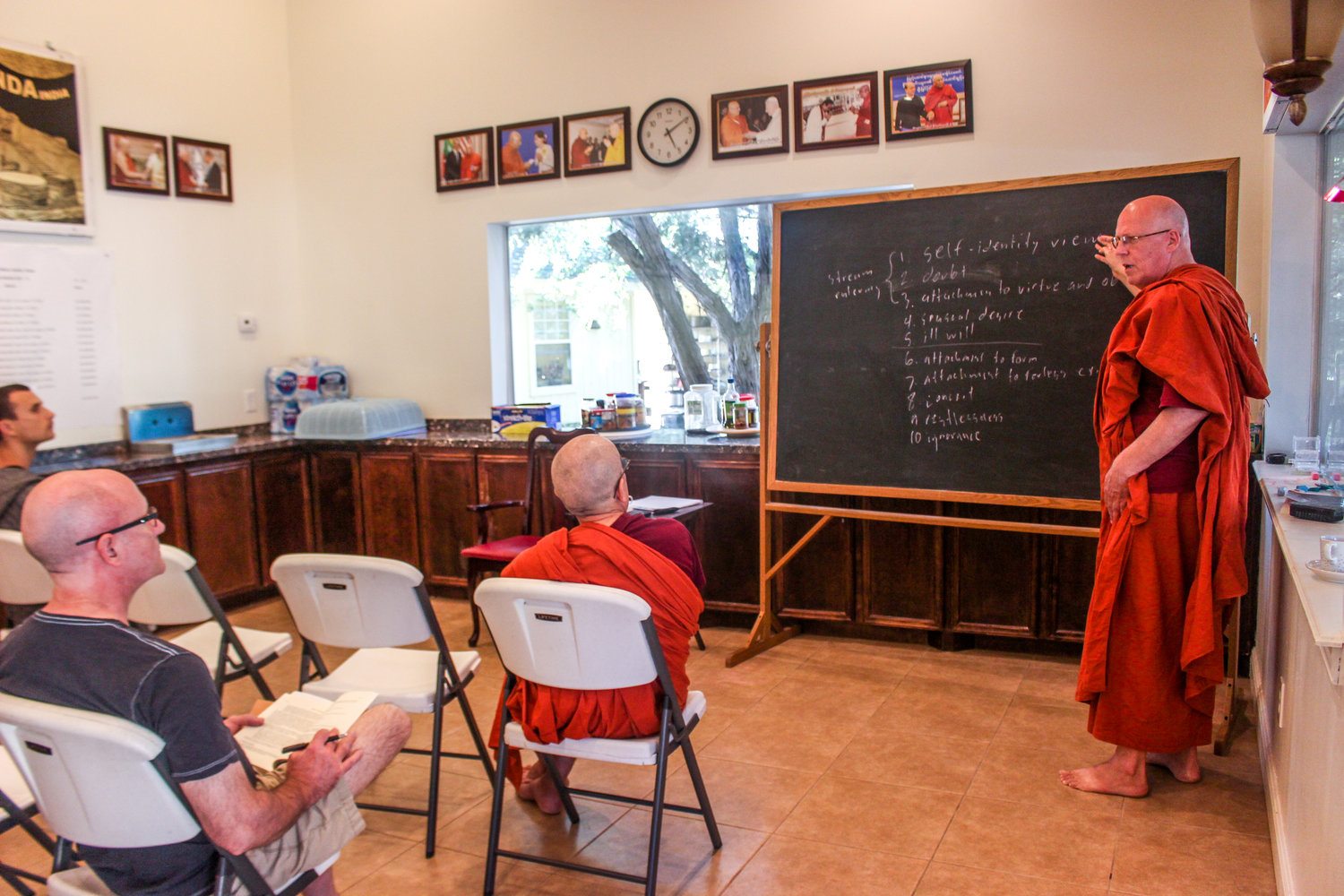
I teach a class here in Minnesota Wednesday Evenings 6:00-7:30 pm, CDT (Chicago time) called Buddha’s Book Club that can also be attended via Zoom. Next week, May 7, we will begin reading the book together, word for word, while I offer commentary. I would like to invite anyone in my readership here who might be interested to join us. Email me at bhikkhu.cintita@gmail.com for a Zoom link.


 Buddhism is a practice tradition. It aims at achieving the cardinal skills of virtue, wisdom, and maturity. The awakened person has perfected these skills, much as the master chef and the virtuoso pianist have perfected theirs. The Dharma is a guide for Buddhist practice, much as a cookbook is a guide for haute cuisine.