I just came across this article by Jayavara Attwood that removed much of the mystery in my mind surrounding a remarkable scholar of early Buddhism, who has had enormous influence on my own understanding and scholarship concerning the early teachings of the Buddha. I was saddened to learn (nine years late) that she is no longer with us.
Scholarship in early Buddhism dwells for the most part within the larger field of Theravada scholarship. This is because the Theravada tradition has—far better than any other tradition—kept the early texts alive, along with the Pali language in which they were transmitted to Ceylon not long after the time of the Buddha. (The Theravada tradition also supplements the Pali Canon by texts of later compilation, most notably the Commentaries including the highly regarded Visuddhimagga.) I myself have been largely disappointed with modern Theravada scholarship for its reluctance to challenge much of the orthodoxy that the tradition has accumulated but left unquestioned for many centuries, even when modern scholars seem to make little sense of those orthodox understandings. (Modern Mahayana, and perhaps especially Tibetan scholarship, in contrast, seem to enjoy more liberty, and to be more productive of insight in their respective fields.)
My two favorite scholars of early Buddhism are exceptions to the self-imposed limitations in their field. On encountering each in my reading and pondering over the years, I remember having the same reaction to each, “By golly, he’s got it!” or in the other case, “By golly, she’s got it!” Each cracked open issues that I had been trying to wrap my head around for years, in such an explanatory way that I knew they had to be right. However, both scholars remain relatively obscure in their field. The first is the late Sri-Lankan scholar-monk Kaṭukurunde Ñāṇananda. The second is the late Oxford scholar Sue Hamilton. If you go to cintita.org, you will find the page on book resources in the menu bar. Scroll down to “Dhamma scholarship,” and you will find three books by the venerable, followed by Dr. Hamilton’s most important work.
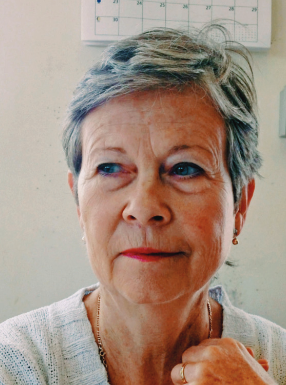
The reason Sue Hamilton was long a mystery to me was that her active work was limited to a few years around the turn of this century. She was a flash in the pan, then disappeared from the scene. Moreover, there has been virtually no subsequent mention of her in scholarly circles. Attwood provides an account of the choices she had made in her life at that time to end her career. Attwood was the only scholar I was aware of who had expressed admiration for her work (though he points out that her teacher, the very well known Richard Gombrich, had become a strong advocate; I had missed that).
Hamilton advocated an epistemic understanding of the early Buddhist texts. As Attwood puts it, “Hamilton showed that experience was central to Buddhist teaching and ‘reality’ was not.” As she put it, “If we want to understand anything about ourselves at all, then, it is with our khandhas—our experiencing apparatus—that we need to start.” This idea now pervades my own understanding. In fact I’ve reached the conclusion that until one understands this fundamental point, one will remain hopelessly confused in one’s intellectual understanding of Dhamma. Time and again I’ve seen scholars try to explain some Dhamma teaching or another, then give up for having failed to appreciate what boils down to a simple point. Hamilton’s work is not an easy read—it is scholarship intended for Buddhist scholars—but for anyone wishing to develop a deep understanding of Dhamma, I would recommend it as essential reading.
BC


Leave a Reply